From grumpy to great - how smart PMs manage conflict

What should you do when your stakeholders just aren’t getting along?
Building relationships and avoiding conflict is usually the Project Manager’s go-to. Makes sense - there will always be more projects, and it’s wise to maintain the bridges you’ll need to walk over again.
That’s where your well-worn tool belt of collaboration techniques comes in handy. But sometimes, even amongst friends, friction points still surface.
Stakeholders and the Roots of Conflict
In our article Stakeholders Everywhere: Who to BFF, Who to Watch, we looked at how people feel about your project and how best to open the right conversations.
This conflict guide assumes you’ve done that groundwork. You’ve mapped your stakeholders, worked out who to engage deeply, and who you simply need to monitor. But even then, conflict has a way of slipping in.
For example:
- A supportive stakeholder may suddenly clash with another over scope.
- A neutral player might become resistant if they feel excluded.
- An opponent may seize the moment to make noise and block progress.
Conflict is often the symptom of weak alignment, not just a communication breakdown.
When Conflict Can’t Be Avoided
So you’ve done all the good work, but your stakeholders still aren’t sharing the sandpit nicely. That’s when conflict becomes unavoidable — but it’s still manageable.
Here are a few common conflict styles PMs use:
- Collaborating - working through differences for a win-win outcome.
- Compromising - meeting in the middle to keep things moving.
- Accommodating - letting one side have their way when the stakes are low.
- Avoiding - delaying or sidestepping when conflict is trivial or ill-timed.
- Competing - pushing through when speed or authority matters more than consensus.
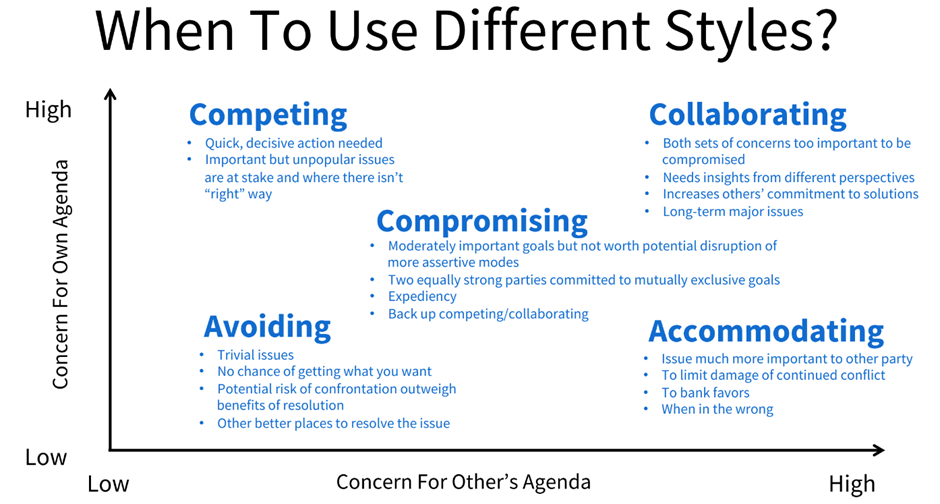
Knowing when to use each style and which stakeholder type you’re facing is the fun part.
From Clash to Consensus
Conflict should never be normal but it’s not always bad. Handled well, it can:
- Surface hidden risks early.
- Strengthen trust if you listen well and show fairness.
- Push the project team to clarify priorities.
Think of it this way: if stakeholder mapping is the compass, conflict management is the steering wheel. One gives you direction, the other keeps you on the road.
Final Thought
Conflict is inevitable in projects, but confusion isn’t. By understanding your stakeholders and applying the right conflict style at the right time, you can turn clashes into consensus and keep your projects moving.
For more on the people side of projects, see Stakeholders Everywhere: Who to BFF, Who to Watch. Together, these two pieces give you a playbook for stronger, smoother delivery.