Stakeholders everywhere: Who to BFF, Who to Watch
Plenty of Project Management and Change Books talk about engaging your stakeholders but they always seem to skip over the ‘how’ and ‘when’ — well let’s fix that.
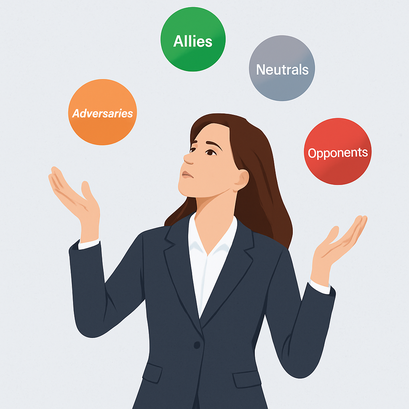
This diagram shows the different Stakeholder tribes that will influence your project.

Who to talk to first
Once you've had a thinkg about where your stakeholders are on the map, it is a best practice to prioritise stakeholder engagement in the following order:
1) Allies,
2) Opponents
3) Fellow Travelers
4) Neutrals
5) Adversaries
These priorities ensures the highest level of ongoing support for the project.
Stakeholder Approaches
Listed below are various approaches for each Stakeholder Type to either maintain or shift each stakeholders’ level of commitment.
Allies (High Agreement/High Trust)
An approach for Maintaining Agreement and Trust
Goal: Affirm agreement
1. Reaffirm the quality of the relationship
2. Acknowledge any doubts and vulnerability you have with respect to your vision and project
3. Discuss their issues or concerns with your project
4. Ask them for advice and support
5. Achieve understanding on their role and responsibilities
6. Confirm their commitment to support your project
Fellow Travelers (High Agreement/Low Trust)
An approach for Maintaining Agreement and Increasing Trust
Goal: Build trust
1. Reaffirm agreement by reiterating the value and importance of their support of your project
2. Acknowledge any caution that exists
3. Make it clear you are not expecting them to get actively involved
4. Ask them how they would like to be updated on the project going forward
Opponents (Low Agreement/High Trust)
An approach for Shifting Commitment and Maintaining Trust
Goal: Build agreement
1. Reaffirm the quality of the relationship
2. Identify their particular skills and talents and how these connect to your project
3. State your position (case for change, vision for change, benefits to them)
4. State what you think their position is in a neutral way
5. Extend a personal invitation for them to get involved with your project
6. Engage in problem-solving so that you build something together
7. Confirm their commitment to support your project
Adversaries (Low Agreement/Low Trust)
An approach for Shifting Agreement and Increasing Trust
Goal: Minimize threat to your project
1. Estimate the impact on your project if this person is not on board
2. Identify individuals who can educate you about this person, their issues and concerns
3. State your position (case for change, vision for change, benefits to them)
4. Ask questions that respectfully uncover root cause of their resistance
5. State what you think their position is in a neutral way
6. Identify your own contribution to the lack of trust that exists
7. End the meeting with your plans and no demands
8. If you are going to go around them or over them, tell them your plans
9. Let go; the more you try to convert and pressure them, the more entrenched they will become in their position
Neutrals (Unknown Agreement and Unknown Trust)
An approach for Determining Agreement and Level of Trust
Goal: Educate and determine their position
1. State your position (case for change, vision for change, benefits to them)
2. Ask where they stand
3. Ask what it would take for them to support your project
4. Extend a personal invitation for them to get involved with your project