𝘾𝙝𝙖𝙣𝙜𝙚 𝙈𝙖𝙣𝙖𝙜𝙚𝙢𝙚𝙣𝙩 𝙖𝙩 𝙩𝙝𝙚 𝙢𝙚𝙨𝙨𝙮 𝙨𝙩𝙖𝙧𝙩
Everyone says change management should start early.
Quite right, as I love to say ‘Its people that deliver, not projects’.
But early is usually the sense making stage when the project knows the least.
One of the best change principles I ever learned was this:
Don’t start with the change plan. Start with the story people are already telling.
Because there is always a story.
“This will be dumped on us.”
“The decision has already been made.”
“They’ll ask for input, then ignore it.”
“This is just another project that doesn’t understand how we work.”
That story shapes how people engage, or don’t.
So early change work is about helping the business safely reveal the impact.
I worked with a fantastic Lean Change practitioner early in my career who often reminded me:
“The business always knows how to improve the work. The question is whether they trust you enough to tell you.”
That means asking better early questions:
· What will make this hard?
· Where does the real work differ from the documented process?
· What old workarounds are people protecting?
· Who needs to trust this before others will follow?
· What would make the timing painful?
And the project team is a stakeholder too.
They are a key part of realising the business value, not just delivering tasks.
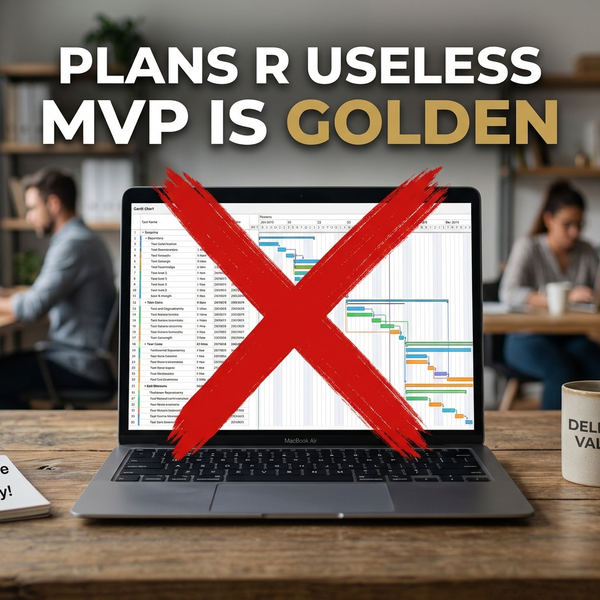
The modern way to handle early uncertainty is to define what we can, name what we don’t know yet, and put discovery activities and decision dates around the gaps.
That is a story the project team needs to believe in and be able to tell.
The artefacts still matter. But the artefacts are the tent pegs. The real craft is having the right conversations at the right time in the right rooms.
Good change management helps people make sense of a project while the project is still becoming clear.
That is where it earns its seat early.
Here's a few practical ideas which I'll dive into more in a future post.
In the first few weeks, aim to produce:
- A change story log
What are people already saying or assuming?
- A known/assumed/unknown register
What is fact, what is working assumption, and what still needs validation?
- A stakeholder and SME map
Who owns the process, who knows the process, and who influences adoption?
- A process reality check
Where does actual work differ from documented work?
- A test-to-change mapping
Which test scenarios reveal business impact, training needs, or readiness risk?
- A discovery confidence matrix
Where are we confident, where are we guessing, and what are we doing next?
- A simple team narrative
What should the project team consistently say about the current stage?
- A lightweight change plan
Enough structure to guide action, not so much detail that it becomes fiction.