AI-polished comms… but who’s listening?
GenAI can write the update. It still can’t tell you how they hear it.
GenAI has made it very easy to write a polished project update.
Useful, certainly. Dangerous, if we start believing the writing was the hard part.
Most project and change teams are not short of words. They are short of attention: useful attention, from the right people, at the moment it matters.
That is why the harder problem is rarely “how do we phrase this?” The harder problem is working out what deserves attention, who needs to hear it, who needs to hear it first, and what might happen if they miss it.
Most of us have seen the pattern. A date moves. A decision changes. A defect appears. A training session slips. A process rule gets tightened. Someone discovers that the “minor workaround” is actually holding half the operation together.
The natural response is, “We should send an update.”
Fair enough. Sometimes we should.
But the update is only the first visible artefact. The useful work starts a step earlier: who just became affected?
That one question changes the whole shape of the communication.
Take a go-live that moves by two weeks. On paper, it is a schedule change. The usual update almost writes itself: revised date, thanks for your flexibility, more information to follow.
GenAI could make that message sound warm, structured and professional in thirty seconds.
The problem is that the date change lands differently depending on where you sit.
The sponsor hears confidence risk. They need to know whether this is a controlled slip or the first sign of drift.
The test lead hears resequencing: what gets retested, which defects are ageing, which scripts are now blocked.
The training lead hears rebooking pain. Are the materials frozen, or is the process still moving underneath the training plan?
The frontline manager hears another awkward team conversation. Their people will ask whether the project knows what it is doing, and they may not have a good answer yet.
The support team hears hypercare impact. Rosters, coverage and escalation paths may all need another look.
The business SME may simply hear: “Here we go again.”
One event has landed in six different places.
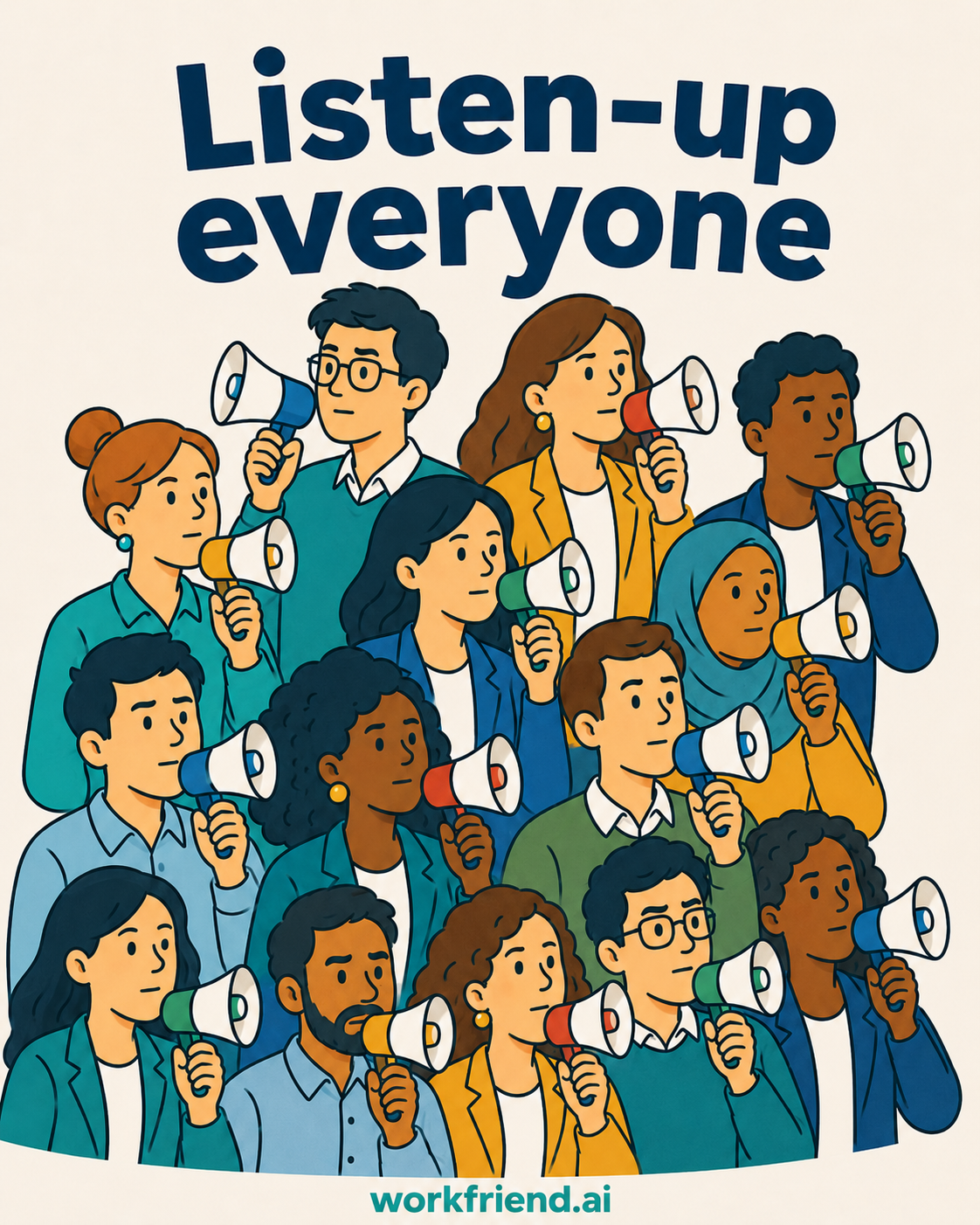
That scatter is where generic updates start to fail. A single broadcast may tell everyone the date has moved. It may still leave each group to work out the implication for themselves.
That pattern shows up again and again. We communicate the event when what people need is the implication.
The event is easy to describe. The date changed. The defect is open. The training is delayed. The process has been updated.
The implication is messier. It depends on role, timing, pressure, history, politics, confidence and workload. It depends on who is already tired. Who is carrying risk quietly. Who is likely to get blamed if the message is misunderstood. Who has to explain the change to others. Who will create a workaround if the official answer feels too vague.
Good change communication needs a strong translation layer. It takes the project fact and asks how it will be heard by the people who have to absorb it, explain it, defend it, or act on it.
That is why the role is broader than writing. At its best, change communication is part translator, part air-traffic controller, part political radar.
They are listening for the sentence behind the sentence.
“We need more detail” might mean “we do not trust this yet.”
“The business is busy” might mean “this is not safe or useful enough to prioritise.”
“Can we put it in the weekly update?” might mean “I do not want to have this conversation directly.”
“Let’s cascade it through the managers” might mean “we are hoping the hierarchy will absorb the awkwardness.”
Be that as it may, managers often do need to be involved. They own the local context, and people look to them when the official project language starts to feel remote.
But a manager cascade is not a neutral pipe.
Messages do not travel cleanly through an organisation. They pick up tone, hesitation, interpretation and local politics on the way.
One manager softens the message because they do not want conflict. Another delays it because the week is already overloaded. Another adds their own commentary. Another answers a question they were not equipped to answer. Another is supportive in the project meeting and lukewarm with the team.
By the time the message reaches the people doing the work, there may be five local versions of the truth.
A better way is not to avoid managers. It is to support the channel properly.
If managers are the channel, then the communication is not just the email. It is the manager briefing, the talking points, the likely questions, the escalation route, the single source of truth, and the feedback loop when the local story starts to drift.
The same problem shows up in channel choice.
An intranet article might be right for broad awareness. It is usually a poor choice for a small group that needs to change behaviour by Monday.
A Teams post might be right for a fast operational nudge. It is a bad place to bury a sensitive decision.
A weekly project update might be fine for general visibility. It is too slow when a missed dependency will create rework tomorrow.
A decision note is better than a friendly narrative when the real issue is that someone needs to make a call.
A job aid is better than an email when the real issue is that people need to do the task differently at the point of work.
Going through those choices properly takes discipline. It also takes a bit of restraint, especially now that AI makes it so easy to generate more content.
A better way to tackle it is to treat communication as live impact triage.
When something changes, the first task is to sense before writing.
What changed in plain English? Who is newly affected? What changed for them? What could go wrong if they miss it? Who needs to know before anyone else? Which channel fits the risk? What is the smallest useful message that will help people act with less confusion?
That is the one-page playbook.
Not a three-page communications strategy. Not a beautiful cascade diagram. Not another comms calendar that looks impressive until the project reality changes on Tuesday afternoon.
When a project fact changes, find the affected people, understand the implication, choose the channel by risk, and send the minimum useful message.
Minimum does not mean careless. It means respectful.
It means we do not make busy people decode a polished paragraph to find the one sentence that matters. It means we do not ask everyone to pay attention when only one group is affected. It means we do not hide a decision inside a project update. It means we do not send awareness comms when what we really need is a behaviour change. It means we do not use empathy as decoration while avoiding the hard truth.
This is where the AI question gets interesting.
The useful role for AI is not content multiplication. It is burden reduction.
Instead of asking, “Write me an email about the delayed go-live,” ask a better question.
“Here is the change log, risk register, stakeholder map, training plan and latest decision. Who is newly affected? What might each group misunderstand? Which groups need a direct brief? What should be a decision note, what should be a manager pack, what should be a Teams alert, and what should not be sent at all?”
That is a more useful use of AI.
It helps the project team think before it asks the business to read.
Because the danger now is abundance. We can produce endless communication: polished, friendly, structured, stakeholder-aware and grammatically clean.
The organisation still has to absorb it.
When we are careless, we make busy people do the thinking we should have done before pressing send.
We ask them to read a long update to find the one sentence that matters. We send everyone the same message and leave each group to work out its own implication. We hide decisions inside status updates. We send awareness comms when what we actually need is a behaviour change. We use warm language to avoid saying the thing plainly.
That is not respect for the audience.
It is noise with manners.
There is another layer underneath this, which is probably worth its own article.
For years, change communication has leaned on WIIFM — “what’s in it for me?” — as if it were the master key to attention. It is useful, but it is only one lever. Sometimes people are listening for personal benefit. Just as often, they are listening for threat, status, belonging, workload, trust, or whether they are about to be left looking foolish in front of their team.
This is where impact triage opens the door to the next question. Once you know who has been affected, you can ask what they are already tuned to notice.
The sponsor may be listening for confidence risk. The test lead may be listening for wasted effort. The frontline manager may be listening for social safety. The business SME may be listening for whether this is another project that does not understand the work.
That is a bigger conversation. For now, it is enough to say that attention is selective. If the message does not connect with what the audience is already scanning for, even a beautifully written update can slide past them.
So, to bring it back to the beginning: GenAI has made the writing cheaper.
Judgement has become more valuable.
The change teams that do this well will not be the ones producing the most polished updates. They will be the ones who notice impact early, brief the right people first, choose channels carefully, and help people understand what has actually changed for them.
Because when communication has become cheap, we’re all in the attention management business.